


Some buildings shape a skyline.
OTHERS SHAPE A STORY
In the heart of downtown Minot stands the iconic “Big M Building,” formerly known as the Minot Federal Savings & Loan/Midwest Federal Building. For decades, it was a cornerstone of the community — a place of business, ambition, and everyday life.
THE JOURNEY
What began as a revitalization and renovation of Minot’s iconic downtown Big M Building ultimately became a “cutting-room-floor” project for our architecture team.
Although the project was never completed, it involved extensive planning, creative exploration, and thoughtful design long before construction could begin.
For our team, this effort was more than a renovation—it was a careful restoration of identity for a once-thriving center of commerce.


Renovation Considerations
Every renovation begins with a deep understanding of the building’s history and structural integrity.
Originally constructed in the early 1960s as a federal savings and loan facility, the Big M Building required a detailed review of original architectural plans, on-site measurements, and thorough inspections.
Because the client prioritized preserving key features, our design team conducted a comprehensive site analysis to identify elements that could be salvaged and incorporated into the new design.
Year Built:
1962-63
Size:
100,000 sq. ft.
Original use:
Bank and office space.
Site:
78' x 140' corner lot with ~3' grade change
Cost:
$2 Million
Notable Features
-
Drive-in banking windows
-
Community room and small theater
-
Top-floor restaurant
-
Exterior window-washing system integrated into curtain wall
Structure & Systems
-
Steel frame construction (Robertson Q-Air) with 4" concrete
-
High-pressure dual-duct HVAC system
-
Gas-fired boiler with rooftop mechanical equipment


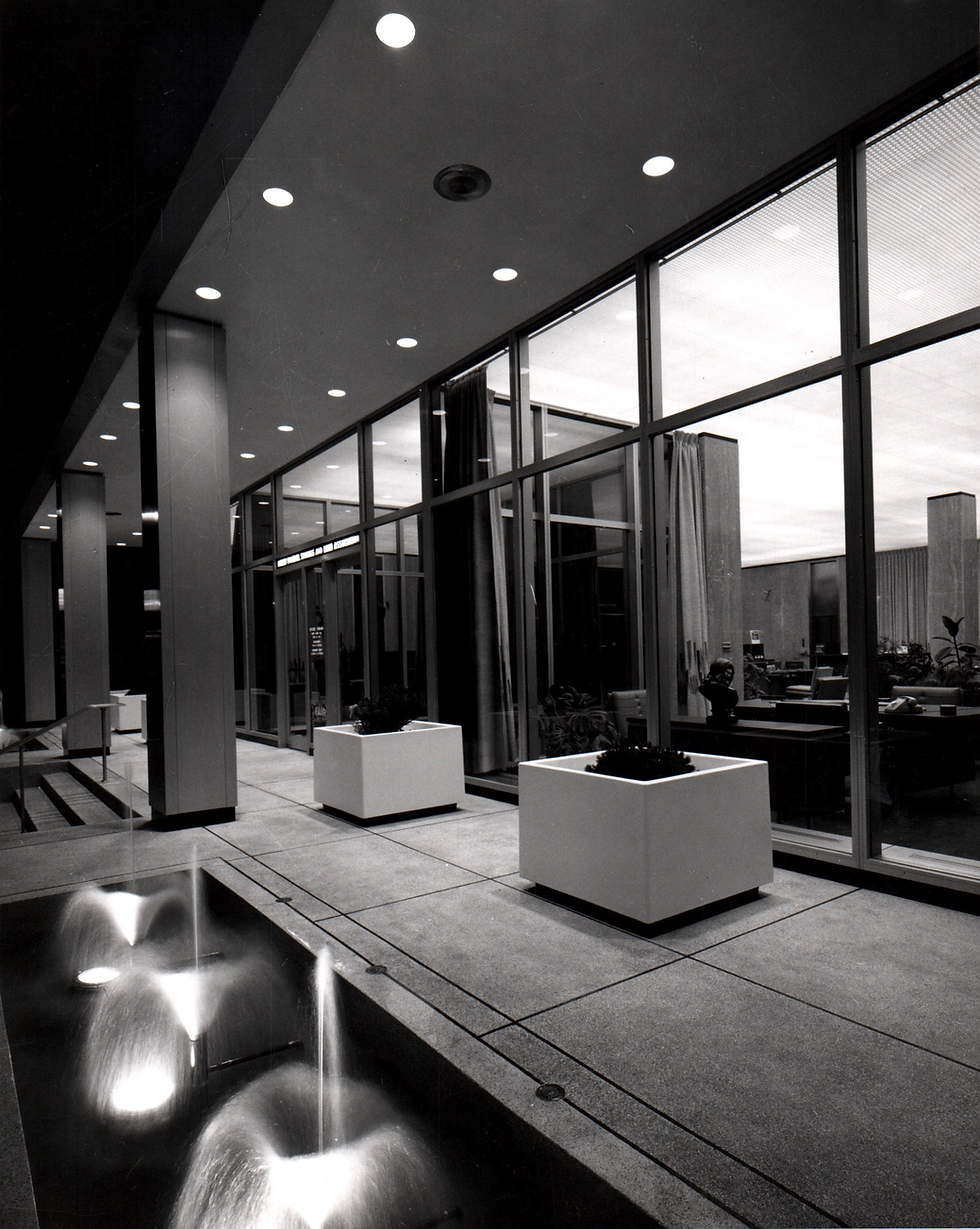
View original floor plans and construction photos below.


THE DESIGN PLAN
The proposed design reimagined the building as a dynamic mixed-use development, featuring luxury condominiums, modern apartments, amenity spaces, a fitness center, and commercial lease suites.
Central to the vision was a commitment to honoring the building’s history. The design integrated original materials and architectural elements wherever possible, blending mid-century modern character with contemporary finishes.
Architectural Context:
Mid-Century Modern Design
The Big M Building in downtown Minot, constructed between 1962 and 1963, is a clear example of mid-century modern International Style architecture. This design approach emphasized simplicity, functionality, and a rational, orderly appearance.
The building’s box-like form, flat roof, and strict grid of vertical mullions and glass panels reflect these principles. Its façade is defined by repetition and structure rather than ornamentation, creating a clean and disciplined visual rhythm.
The use of a glass curtain wall was a defining feature of this era and signaled modernity and progress. In buildings like this, the exterior skin is non-structural, wrapping around a steel frame and allowing for expansive glazing. This approach created a sense of openness and efficiency, qualities that were especially appealing to financial institutions of the time. Vertical lines further emphasize height, giving the building a stronger presence within the skyline despite its modest scale.
Constructed during the post–World War II economic expansion, the Big M Building reflects how national architectural trends reached smaller American cities. It follows the same design principles seen in major landmarks such as the Seagram Building in New York and the Inland Steel Building in Chicago, adapted to a regional context.
As a result, it stands as both a symbol of Minot’s growth in the 1960s and a local expression of a broader movement in corporate modern design.


The redesign was guided by these mid-century modern design principles, which informed both the aesthetic direction and material selections throughout the project.
REINTRODUCING ORIGINAL COLOR SCHEMES
inspired by the building's era


REPURPOSING THE ICONIC BANK VAULT DOOR
as a focal architectural element
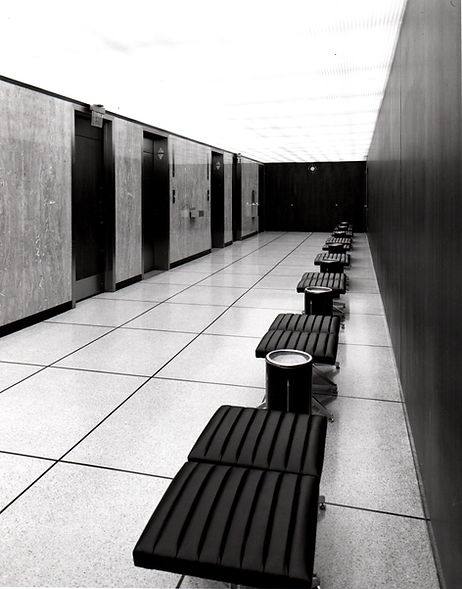
SALVAGING TERRAZZO FLOORING AND WALL ELEMENTS
to preserve authenticity

TRANSFORMING ORIGINAL WOOD FINISHES TO CUSTOM FURNITURE
to honor craftmanship
BLENDING HISTORIC CHARACTER WITH MODERN DESIGN ELEMENTS
for a unique space


Additional salvaged materials were thoughtfully incorporated into the renovation, allowing mid-century modern influences to merge seamlessly with contemporary finishes.


ARCHITECTURE TEAM VISION


Although the renovation was never realized, the work completed during the design phase reflects our team’s dedication to thoughtful, historically grounded design.
The Big M Building remains a powerful symbol of Minot’s architectural heritage, and a reminder of the potential still waiting to be unlocked within its walls.